
Between January 2025 and March of that same year I worked creating the original channels for FlowTV: a gallery of videos generated with Veo2 that Google used as a showcase for the model and that not only showed what it was capable of, but also served as a starting point and inspiration for anyone who wanted to get started in the world of generative video. Because flow TV was not just a gallery, it also showed the prompt, the code for how those videos had been created, the text sequence that created the clip entirely through text-to-video (t2v), which at the time was the standard. I think, to this day, I am one of the few crazy people who use this function.
In flowTV, all the videos were generated with a model called Veo 2, a model that turned the perception of AI-generated content upside down. For the first time, the videos had a level of realism that made it practically impossible to claim they were generated and not filmed.
For the first time, a model was capable of generating realistic videos.

RIP, this model is already discontinued, and I believe you can only use a slightly later version that is available on Magnific; we will miss it.
After Veo2 came Veo3.1 and now we have Omni; a model that, no matter how much Google tries to convince us otherwise, for me, has lost the magic that Veo2 had, at least as far as the image is concerned. (in terms of perceived realism of the images, not resolution). Today, in 2026, the text-to-video videos generated with Omni incomprehensibly remind me more of the original versions of Stable Diffusion, Midjourney 4 or similar models from 2024 than what Veo2 offered us a year ago. Here, an example of the same clip generated with both models:
Prompt: Compilation of portraits
OMNI | AUGUST 2026 | Prompt: “Compilation of portraits”
VEO2 | JANUARY 2025 | Prompt: “Compilation of portraits”
I’m not sure how we got here, but I have a theory.
Veo 2 was not an easy model to use; getting it to generate exactly what you wanted was a tremendous puzzle, and you usually ended up making many concessions. It required a lot of creativity when prompting to find the biases in the semantics of the words that would steer the model toward specific places. What I understand as advanced prompting. However, if you didn’t care about the result of the action and only focused on the visual aspect of the generation, there was, and still is, no other model that could produce such a perceptibly real result with a basic prompt. The style of the videos it generated was reminiscent, in terms of saturation, contrast, and movement, of the images that most humans associate with reality. In some way, they generated videos that, while flawed and uncontrolled, looked a lot like what we see with our own eyes.

My feeling is that Veo2 was a wild horse, with a long mane, a muscular body, and shiny coat. A horse as unique as it was wild that refused to be tamed, but that, with the right care and time, you could eventually ride—but it was in charge, you just went along for the ride and enjoyed the journey. We were a few crazy ones who dared to do it; for many, the effort in time and preparation wasn’t worth it if the horse didn’t end up listening to you. But it was clear that those who refused to ride it watched us gallop and dreamed of being able to control it, to tame it. So they took the horse, tied it up, started putting saddles and horseshoes on it, put on boots and stirrups, tied up its mane, fattened it up so it would gain weight, forced it to follow paths, and made it work day and night. In the end, the horse obeyed, resigned, and now not only does it go where it’s told; now everyone can ride it. But that horse, even while being the same one in origin, has nothing to do with the wild horse we rode in early 2025.
This horse is no longer Veo2; now it’s called Omni.
I think it was inevitable, that the commercial demands and the pressures to which development teams must be subjected were leading safely to this or something similar. But I also think that there is too much dependence on multimodal models when it comes to training and using generative models. If you talk to the experts at Google, they will always recommend that, to write a prompt, it is best to use Gemini. That Gemini has trained the model and therefore they speak the same language. Something that on paper seems to make sense. The problem is that if we put it to the test we will see that in reality Gemini becomes an intermediary to whom we will keep asking to change things and rewrite the prompt over and over again. My feeling, after many years obsessed with understanding how we talk to video generation models, is that you have to avoid LLMs at all costs. The idea that Gemini is the best way to write a prompt is a fallacy of such magnitude that, at times, I think I am going crazy because I do not understand how no one else sees something that is evident to me.
Perhaps I am.
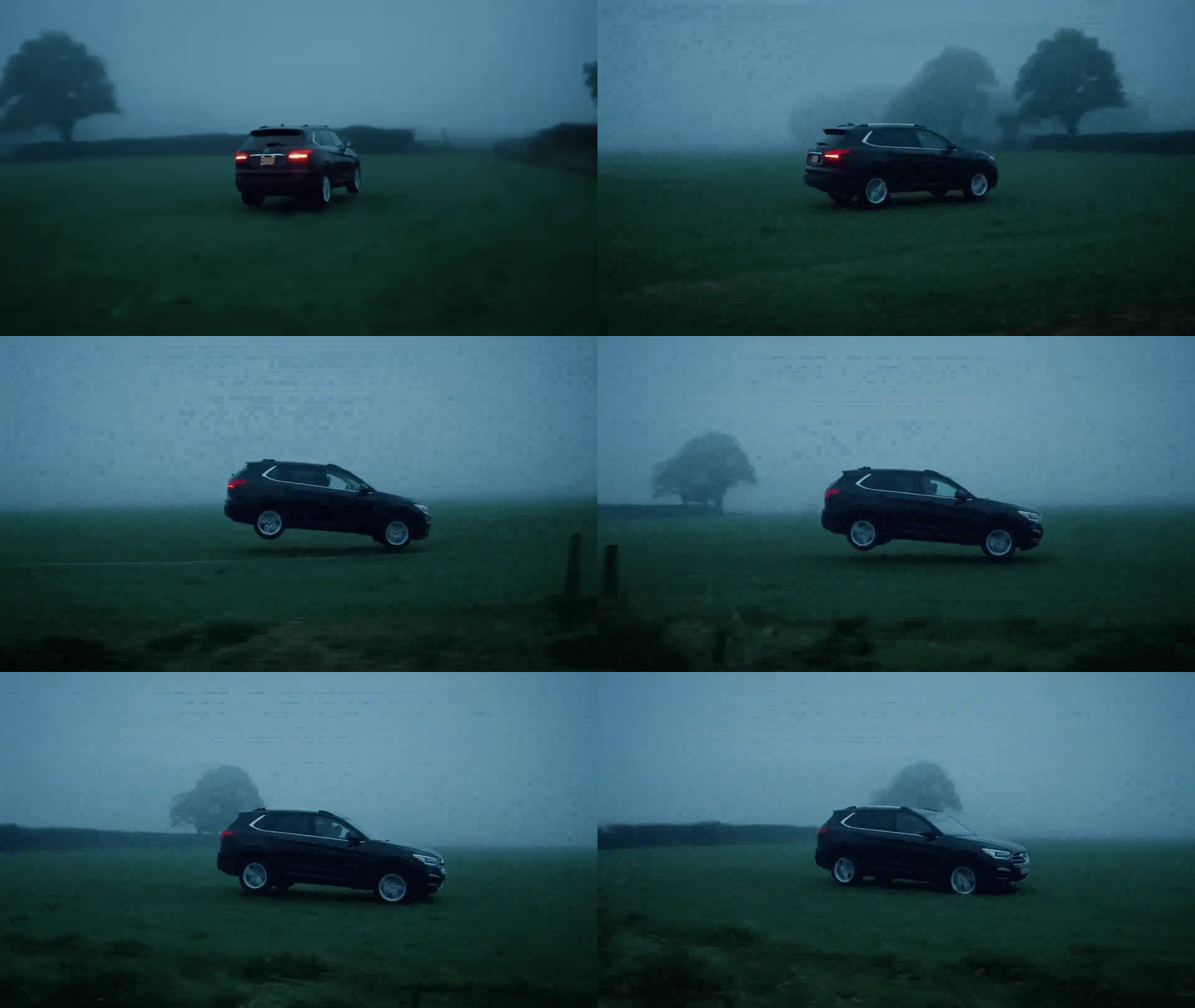
When I train someone to generate videos, the first thing I ask them is not to use an LLM. To avoid at all costs relying on Gemini, ChatGPT, Claude, or any other model that tempts them with its promise as a language translator. A proposal that used to generate doubts for me, being literally the opposite of what I hear in most training sessions, but one that, more and more, I realize may be the only way to understand what is happening. Because the more time I spend generating videos (in most cases for the sheer pleasure of generating them), the more I discover that we have no idea how to talk to algorithms, and that they have no idea how to talk to us. As far as image is concerned. But we are so egocentric that we believe they understand us because the results look like what we asked for; at no point do we think that the result is not a projection of our words but a biased interpretation. An interpretation that, if we look at it and analyze it, will allow us to establish a conversation with the model. We will be able to discover things about how these algorithms understand the world, about how they see our reality. And in this reading, we will discover that their semantics are nothing like ours.
But now no one reads images.
People just want the horse to obey; they don’t care where that horse came from, how old it is, or what it enjoys. The reality is that through brute force (i2v) it is compelled to do exactly what it has to do. Because, yes, with Omni you can get incredible videos, but they are obtained through whips, shouting, and kicks. Because the horse we are driving now doesn’t want to gallop, but if we force it, it will (people aside). Here is a sample of the process:
VEO2 2025 | Prompt: “A cat in a forest”
OMNI 2026 | Prompt: “A cat in a forest”
OMNI 2026 | Prompt: >40 words
Why do I have to provide so much information about what the world is like to generate something as simple as a cat in a forest? Shouldn’t reality be the starting point, as it was in VEO2? I like to think there is still hope to free the horse, release the stirrups, remove the bits, and turn back. To look for another path, try to understand the nature of these models, and recover the strength they once had in order to then figure out how we can make them take us where we want to go.
I think that it was precisely with Veo2 that we lost our way. Surprise and wonder gave way to business and judgment. People stopped reading, looking at, and analyzing images and started instrumentalizing and forcing them. When images became indistinguishable from real ones, many assumed that generative AI was, above all, a business; that its destiny was automation and that language models were the way to extract maximum performance from image models. Conversation was delegated without understanding what language they were speaking.
We have forgotten that the value of image models is not in advertising, fake news, VFX, or entertainment—they are inevitably used for these purposes, but what is interesting about these models, what makes them important, is that they help us understand how we see the world, how we relate to the meaning of truth and what distinguishes it from reality, they help us understand the role of stories in people’s lives and understand where the limit of fiction lies. They help us understand our relationship with what we see and what we remember.
They are much more than images or videos. They are a mirror of what we are and what we have been; a mirror in which, if we look closely enough, we might be able to learn something about ourselves.
But perhaps we are afraid of what we might find in the reflection, and that is why we prefer the models themselves to face it in our place.
Do not allow it.
